

Pedestrian accident claims in New York can involve crosswalks, intersections, parking lots, sidewalks, driveways, delivery vehicles, rideshare cars, buses, trucks, and roadway defects. Because pedestrians have no physical protection when struck by a vehicle, even a low-speed crash can cause serious injuries. Injured pedestrians researching their options may review guidance from a pedestrian accident lawyer Long Island resource to understand how liability, insurance, evidence, and deadlines are generally evaluated.
Quick Answer
A New York pedestrian accident claim usually depends on proof of fault, medical documentation, insurance coverage, and preserved evidence. If a pedestrian is struck by a motor vehicle, the claim may involve no-fault insurance through the vehicle that hit them, plus a separate liability claim if the pedestrian suffered serious injuries. Evidence such as police reports, photos, videos, witness statements, traffic signal details, vehicle damage, medical records, and insurance documents can be critical.
Key Takeaways
- Pedestrian accident claims often involve crosswalks, intersections, turning vehicles, speeding, distracted driving, poor visibility, or unsafe road conditions.
- Drivers in New York must exercise due care to avoid colliding with pedestrians.
- Pedestrians may also face fault arguments, especially outside crosswalks or against traffic signals.
- A pedestrian struck by a motor vehicle may need to file a no-fault claim quickly.
- Serious injury claims may involve medical bills, lost income, pain, disability, and long-term care needs.
- Public property, municipal vehicles, or roadway defect claims may involve shorter notice deadlines.
- Evidence should be preserved quickly because video footage, vehicle data, and scene conditions can change.
Why Pedestrian Accident Claims Are Different
Pedestrian accident claims are different from ordinary car accident claims because the injured person is not protected by a vehicle. A pedestrian may suffer direct impact with the vehicle, the pavement, a curb, another object, or surrounding traffic.
These claims also involve unique liability questions. A driver may argue that the pedestrian crossed outside a crosswalk, entered the road suddenly, ignored a signal, wore dark clothing, or was distracted. A pedestrian may need evidence showing that the driver was speeding, distracted, failed to yield, turned unsafely, ignored a traffic signal, backed up carelessly, or failed to keep a proper lookout.
The claim is rarely decided by one statement from either side. Police reports, camera footage, traffic signal timing, vehicle damage, roadway design, lighting, witness testimony, and medical records can all matter.
Common Causes of Pedestrian Accidents
Pedestrian crashes can happen in many ways. Some involve careless drivers. Others involve confusing intersections, poor lighting, unsafe parking lots, road defects, construction zones, or commercial vehicle activity.
Common causes may include:
- Drivers failing to yield in crosswalks
- Left-turn or right-turn crashes
- Distracted driving
- Speeding
- Running red lights or stop signs
- Backing-up accidents
- Parking lot collisions
- Rideshare pickup and drop-off conflicts
- Delivery vehicle crashes
- Truck or bus blind spot crashes
- Poor lighting
- Unsafe intersections
- Missing signs or signals
- Construction zone hazards
- Broken sidewalks or roadway defects
- Drunk or drug-impaired driving
A strong claim usually identifies the specific conduct or condition that caused the crash. General statements such as “the driver was careless” may not be enough without supporting facts.
Crosswalk Accidents in New York
Crosswalk accidents often involve drivers who fail to yield, turn across a pedestrian’s path, pass another stopped vehicle, or fail to notice someone crossing the street.
New York Vehicle and Traffic Law § 1151 addresses pedestrian right of way in crosswalks when traffic-control signals are not in place or not operating. It also states that pedestrians should not suddenly leave a curb or place of safety into the path of a vehicle so close that it is impractical for the driver to yield.
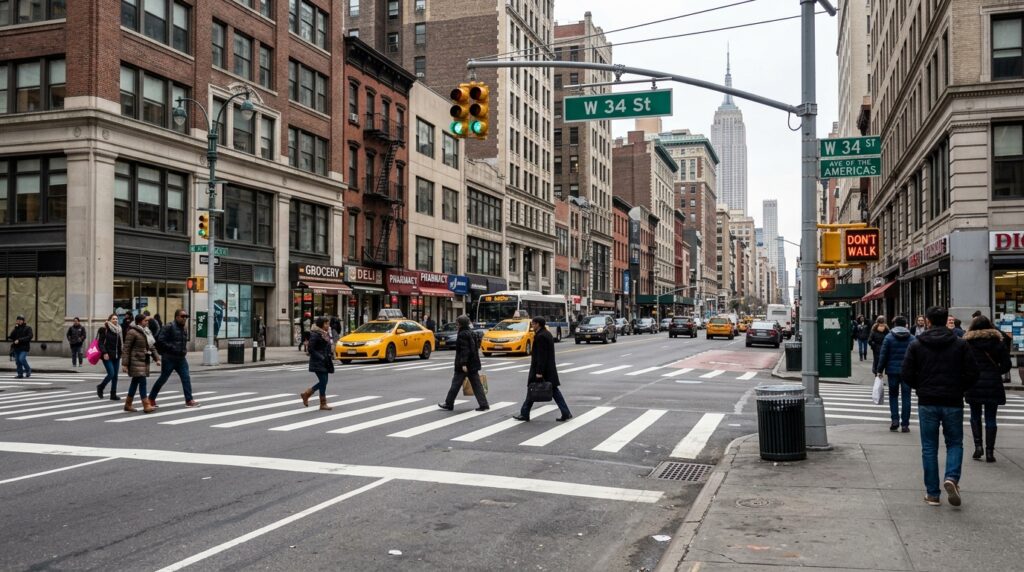
This means crosswalk claims can involve both driver conduct and pedestrian conduct. Important questions may include:
- Was the pedestrian inside a marked or unmarked crosswalk?
- Were traffic signals operating?
- Did the pedestrian have the walk signal?
- Did the driver turn left or right across the pedestrian’s path?
- Was another vehicle stopped for the pedestrian?
- Did a vehicle pass a stopped vehicle at a crosswalk?
- Was the pedestrian visible?
- Was the driver distracted or speeding?
Crosswalk evidence should be gathered quickly because road conditions, traffic signal timing, and video footage may not be available later.
Pedestrian Accidents Outside Crosswalks
Not every pedestrian accident happens inside a crosswalk. A pedestrian may be hit while crossing mid-block, walking near a roadway, entering a parking lot, walking near a driveway, or crossing where markings are unclear.
New York Vehicle and Traffic Law § 1152 addresses pedestrian crossings outside crosswalks. These cases can involve fault disputes because drivers and insurers may argue that the pedestrian failed to yield or crossed unsafely.
However, a pedestrian being outside a crosswalk does not automatically end the claim. Drivers still may have duties involving speed, lookout, control, distraction, and due care. The facts matter.
Evidence may show that the driver had enough time to react, was speeding, was distracted, failed to brake, ignored visible pedestrians, or violated another traffic rule.
Drivers Must Exercise Due Care
New York Vehicle and Traffic Law § 1146 requires drivers to exercise due care to avoid colliding with pedestrians, bicyclists, and certain others on the roadway. This rule can matter in pedestrian accident claims because a driver may not avoid responsibility simply by saying they did not see the pedestrian.
Due care may involve keeping a proper lookout, slowing when conditions require it, yielding where required, obeying signals, avoiding distraction, and giving warning when necessary.
A due care analysis may review:
- Vehicle speed
- Driver attention
- Lighting and visibility
- Road conditions
- Signal timing
- Witness accounts
- Braking distance
- Skid marks
- Dashcam or surveillance video
- Weather conditions
- Driver statements
- Cell phone use
The question is not only where the pedestrian was. The question is whether the driver acted reasonably under the full circumstances.
Turning Vehicle Pedestrian Accidents
Turning vehicles are a common cause of pedestrian crashes. A driver may focus on oncoming traffic while turning left and fail to see a pedestrian in the crosswalk. A driver turning right may look for cars but miss a pedestrian crossing from the sidewalk.
These crashes often happen at intersections, driveways, parking lot exits, shopping centers, school zones, and busy commercial areas.
Important evidence may include:
- Crosswalk markings
- Walk signal timing
- Traffic light phase
- Driver turn direction
- Vehicle damage location
- Pedestrian path
- Witness statements
- Nearby camera footage
- Intersection layout
- Police report diagrams
A turning vehicle crash may also involve a commercial driver, rideshare vehicle, delivery van, truck, bus, or taxi. In those cases, company records and commercial insurance may become relevant.
Backing-Up and Parking Lot Pedestrian Accidents
Parking lots can be dangerous for pedestrians because vehicles may back out of spaces, turn through narrow lanes, move around blind corners, or stop suddenly near store entrances.
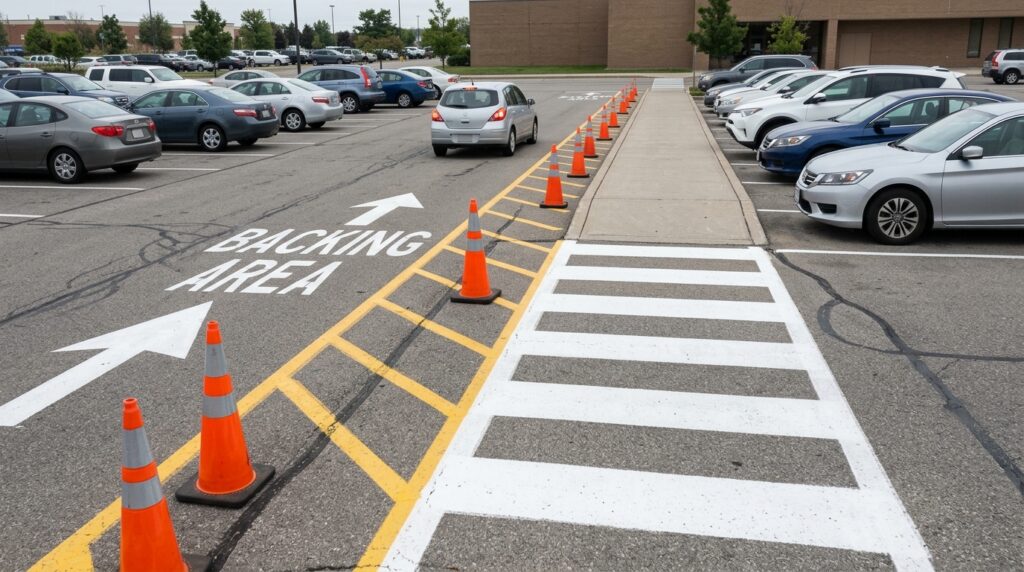
Backing-up pedestrian accidents may involve:
- Failure to check mirrors
- Failure to use backup cameras properly
- Poor visibility
- Distracted driving
- Speeding in a parking lot
- Blind spots
- Large vehicles
- Poor lighting
- Missing pedestrian walkways
- Crowded store entrances
Parking lot claims may involve not only the driver but also the property owner, store, shopping center, parking lot operator, security company, or maintenance provider if the lot layout, lighting, signage, or traffic flow contributed to the crash.
A broader premises liability accident resource may help readers understand how property conditions and control can become relevant when a pedestrian is hurt outside a building, in a parking area, or near an unsafe walkway.
Pedestrian Accidents Involving Trucks and Delivery Vehicles
Pedestrian accidents involving commercial vehicles can be more complex than crashes involving ordinary passenger cars. Trucks, delivery vans, buses, box trucks, and service vehicles may have larger blind spots, wider turns, heavier weight, and company records that should be preserved.
Commercial vehicle evidence may include:
- Driver work records
- Delivery logs
- GPS data
- Dashcam footage
- Vehicle inspection reports
- Maintenance records
- Dispatch records
- Company safety policies
- Commercial insurance documents
- Driver qualification records
A pedestrian crash involving a commercial vehicle may overlap with issues discussed in a truck accident attorneyresource, especially when company responsibility, driver scheduling, maintenance, and commercial insurance are involved.
No-Fault Insurance After a Pedestrian Accident
A pedestrian struck by a motor vehicle in New York may have a no-fault insurance claim. The New York Department of Financial Services explains that if a person was a pedestrian, the no-fault claim should generally be filed with the insurer of the car that struck them.
This is important because no-fault benefits may help with certain medical expenses, lost earnings, and related costs regardless of who caused the accident. However, no-fault benefits are separate from a liability claim against the at-fault driver.
No-fault timing is important. Written notice is generally required quickly, and delays can create disputes. Injured pedestrians should keep the police report, driver information, vehicle insurance details, medical bills, claim numbers, letters, and all insurance communications.
Liability Claims Beyond No-Fault
No-fault insurance may not cover every loss. A pedestrian who suffers a serious injury may also have a liability claim against the driver or another responsible party.
A liability claim may involve damages such as:
- Pain and suffering
- Medical treatment not fully covered
- Future medical care
- Lost income
- Reduced earning ability
- Permanent injury
- Disability
- Scarring
- Loss of normal activities
- Out-of-pocket expenses
New York serious injury rules can affect motor vehicle lawsuits. A liability claim may require medical evidence showing the nature and seriousness of the injury, along with proof that the driver or another party caused the crash.
Hit-and-Run Pedestrian Accidents
Hit-and-run pedestrian accidents are especially difficult because the responsible driver may leave before being identified. These cases require fast evidence collection.
Important steps may include:
- Calling police immediately
- Seeking medical care
- Looking for nearby cameras
- Identifying witnesses
- Recording vehicle details
- Preserving clothing and personal items
- Checking nearby businesses for footage
- Keeping medical and insurance documents
- Reporting the crash to the correct insurer
If the at-fault driver cannot be identified, uninsured motorist coverage, household auto coverage, or Motor Vehicle Accident Indemnification Corporation issues may become relevant depending on the facts.
Evidence That Can Strengthen a Pedestrian Accident Claim
Pedestrian accident evidence should be collected quickly. The injured person may be taken to a hospital, leaving little time to document the crash scene. Family members, witnesses, or investigators may later help preserve important information.
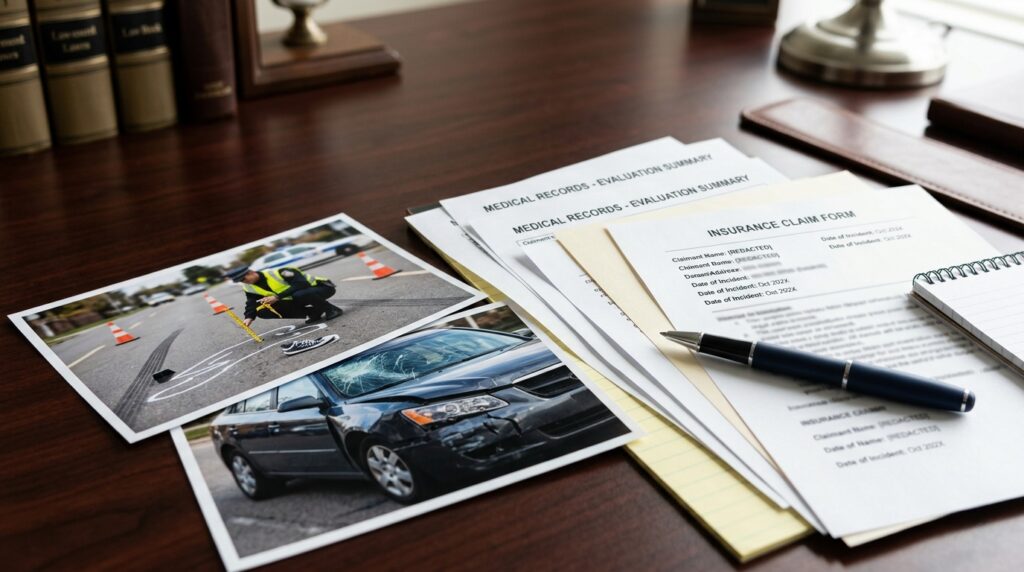
Helpful evidence may include:
- Police accident report
- DMV accident report, when applicable
- Photos of the crash scene
- Photos of the vehicle
- Photos of clothing and personal items
- Crosswalk and signal photos
- Traffic camera footage
- Dashcam footage
- Surveillance video
- Witness names and contact details
- Driver insurance information
- Medical records
- Ambulance records
- Weather and lighting details
- Vehicle damage photos
- Cell phone records, when relevant
- Proof of lost wages
- Insurance letters and claim numbers
For broader documentation planning, readers may review how evidence for personal injury claims can help connect an accident, injury, fault, and damages.
Medical Documentation After a Pedestrian Crash
Medical care should come first after a pedestrian accident. Injuries may be obvious at the scene, but some symptoms can become worse over time.
Common pedestrian accident injuries may include:
- Traumatic brain injuries
- Concussions
- Neck injuries
- Back injuries
- Spinal cord injuries
- Broken bones
- Hip injuries
- Knee injuries
- Shoulder injuries
- Internal injuries
- Facial injuries
- Dental injuries
- Nerve damage
- Scarring
- Chronic pain
- Wrongful death
Medical records help show when symptoms began, what injuries were diagnosed, what treatment was required, and how the injury affected work, mobility, and daily activities. Delays in treatment may give insurers room to dispute causation or injury severity.
Road Defects and Unsafe Walking Areas
Some pedestrian injuries involve road or property defects rather than only driver conduct. A pedestrian may be struck while trying to avoid a broken sidewalk, defective signal, missing crosswalk marking, unsafe construction zone, poor lighting, blocked walkway, or dangerous parking lot layout.
Potentially responsible parties may include:
- Drivers
- Property owners
- Commercial tenants
- Municipalities
- Public authorities
- Road contractors
- Construction companies
- Utility companies
- Parking lot operators
- Maintenance contractors
If a public entity or public roadway condition is involved, the claim may require additional investigation and shorter notice deadlines.
Comparative Fault in Pedestrian Accident Claims
Pedestrian accident claims often involve comparative fault arguments. A driver or insurer may argue that the pedestrian crossed outside a crosswalk, ignored a signal, entered the road suddenly, wore dark clothing, used a phone, or failed to watch traffic.
New York comparative negligence rules generally do not automatically bar a claim because the injured person may share some responsibility. Instead, damages may be reduced based on the percentage of fault assigned to the pedestrian.
Evidence can help respond to unfair blame. Crosswalk photos, lighting conditions, signal timing, video footage, witness statements, vehicle speed, and driver attention may all affect fault allocation.
Deadlines for Pedestrian Accident Claims in New York
Deadlines depend on the responsible party and claim type. The New York Courts statute of limitations timetable lists three years for many negligence-based personal injury claims and car accident claims.
However, shorter deadlines may apply when a government vehicle, public roadway defect, municipal property, public authority, or public employee is involved. New York General Municipal Law § 50-e generally requires a notice of claim within 90 days for certain tort claims against public corporations.
Even when the lawsuit deadline is longer, evidence can disappear much sooner. Video footage may be overwritten, vehicles may be repaired, witnesses may move, and roadway conditions may change.
Common Mistakes After a Pedestrian Accident
Some mistakes can make a pedestrian accident claim harder to prove.
Common mistakes include:
- Not getting medical care promptly
- Leaving without calling police
- Not identifying the driver and vehicle
- Failing to get insurance information
- Not looking for nearby cameras
- Losing witness details
- Throwing away damaged clothing or personal items
- Missing no-fault notice requirements
- Assuming the police report contains all important facts
- Giving broad recorded statements too early
- Accepting a quick settlement before the injury is fully known
- Posting about the crash on social media
- Missing public entity notice deadlines
The strongest claims usually include early medical care, fast evidence preservation, clear insurance documentation, and careful deadline tracking.
When Legal Guidance May Be Useful
Legal guidance may be useful when a pedestrian crash causes serious injury, fault is disputed, the driver fled the scene, a commercial vehicle was involved, insurance coverage is unclear, or a public roadway defect contributed to the accident.
A pedestrian accident claim may require review of traffic rules, crash scene evidence, no-fault insurance, medical records, serious injury issues, comparative fault arguments, government notice requirements, and future damages.
People researching local legal resources may review a Farmingdale legal office location when looking for Long Island pedestrian accident claim information. Publicly available personal injury case results may also help readers understand how serious injury matters can vary, although every case depends on its own facts, injuries, insurance coverage, and evidence.
FAQs About Pedestrian Accident Claims in New York
What should a pedestrian do after being hit by a car in New York?
A pedestrian should seek medical care, call police, identify the driver and vehicle, get insurance information, photograph the scene if possible, identify witnesses, preserve clothing and personal items, and keep medical and insurance documents. No-fault and other claim deadlines may apply.
Does no-fault insurance cover pedestrians in New York?
A pedestrian struck by a motor vehicle may be eligible for no-fault benefits through the insurer of the vehicle that struck them. No-fault benefits are separate from a liability claim against the at-fault driver.
Can a pedestrian still have a claim if they were outside the crosswalk?
Yes. Being outside a crosswalk does not automatically eliminate a claim. Fault depends on driver conduct, pedestrian conduct, visibility, speed, traffic rules, road design, witness evidence, and whether the driver exercised due care.
What evidence is important in a pedestrian accident claim?
Important evidence may include police reports, photos, videos, traffic signal details, crosswalk markings, vehicle damage, witness statements, medical records, insurance documents, clothing damage, dashcam footage, and surveillance footage.
How long does someone have to file a pedestrian accident claim in New York?
Many negligence-based injury and car accident claims in New York generally have a three-year statute of limitations. However, shorter deadlines may apply if a public entity, municipal vehicle, public roadway defect, or government-controlled property is involved.
Final Thoughts
Pedestrian accident claims in New York often involve serious injuries, disputed fault, no-fault insurance issues, and time-sensitive evidence. The strongest claims usually depend on prompt medical care, preserved photos and video, witness information, insurance documentation, and a clear explanation of how the driver, vehicle, roadway, or property condition caused the injury.
