
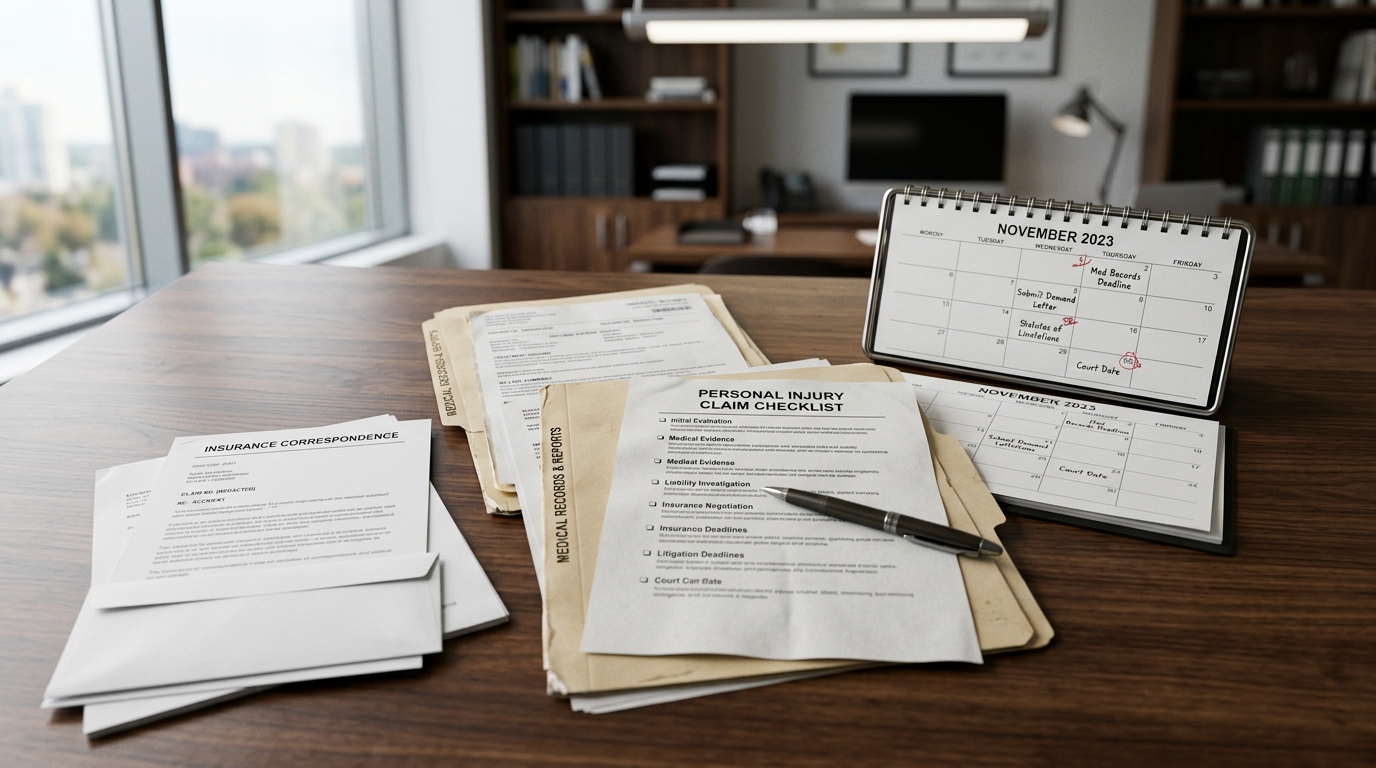
A personal injury claim can be weakened by mistakes made in the days, weeks, or months after an accident. Delayed medical care, poor documentation, missed insurance deadlines, careless statements, lost evidence, and early settlement decisions can all affect how a claim is evaluated. People reviewing their options after an accident may use a personal injury lawyer Long Island resource to understand how evidence, deadlines, medical records, and insurance issues generally affect New York injury claims.
Quick Answer
Common mistakes that can hurt a New York personal injury claim include waiting too long to get medical care, failing to report the accident, not preserving photos or video, losing witness information, missing no-fault or legal deadlines, giving broad insurance statements, posting about the accident online, accepting an early settlement, and not documenting lost income or long-term symptoms. A strong claim usually depends on prompt treatment, clear records, preserved evidence, and careful deadline tracking.
Key Takeaways
- Delayed medical care can make it harder to connect the injury to the accident.
- Accident reports, photos, videos, and witness details should be preserved early.
- New York car accident claims may involve short no-fault notice deadlines.
- Claims against public entities may require much earlier notice than ordinary injury claims.
- Social media posts, recorded statements, and casual comments may be used against the injured person.
- A quick settlement may not account for future treatment, lost income, or permanent injury.
- Organized documentation can help explain liability, damages, and long-term impact.
Mistake 1: Waiting Too Long to Get Medical Care

One of the biggest mistakes after an accident is delaying medical treatment. Some people wait because they hope the pain will go away, feel embarrassed, do not want to miss work, or assume soreness is normal. Unfortunately, a delay can create both medical and legal problems.
From a health standpoint, injuries can worsen without treatment. Neck pain, back pain, headaches, dizziness, numbness, shoulder pain, knee pain, and abdominal pain should not be ignored. Some injuries are not obvious at the scene but become serious later.
From a claim standpoint, delayed care can give an insurance company room to argue that the injury was unrelated, minor, pre-existing, or caused by something else. Medical records help create a timeline. They show when symptoms began, what body parts were affected, what tests were ordered, and what treatment was recommended.
Mistake 2: Not Reporting the Accident
Failing to report the accident can make the claim harder to prove. The correct report depends on the type of incident.
A motor vehicle crash may require a police report and a DMV report. A fall in a store may require an incident report. A workplace injury should generally be reported to a supervisor. A dog bite may need animal control or health department reporting. A construction accident may require employer and site documentation.
For New York motor vehicle crashes, the DMV states that a report is required when anyone is injured or killed, or when property damage to one person exceeds $1,000. The DMV also states that qualifying crashes must be reported within 10 days. (New York Courts)
A report does not automatically prove the claim, but it creates a formal record close to the time of the accident. Without it, the other side may question when, where, or how the accident happened.
Mistake 3: Not Taking Photos or Videos
Accident scenes change quickly. Vehicles are repaired. Ice melts. Spills are cleaned. Broken sidewalks are patched. Construction sites change. Surveillance footage may be overwritten. Dangerous dogs may be moved. Nursing home conditions may be cleaned or rearranged.

Helpful photos and videos may include:
- The exact accident location
- Vehicle damage
- Road conditions
- Wet floors, snow, ice, cracks, holes, or debris
- Broken stairs, poor lighting, or unsafe walkways
- Construction equipment or safety hazards
- Visible injuries
- Damaged clothing, footwear, helmet, bicycle, or personal items
- Nearby signs, cameras, landmarks, or traffic signals
Both close-up and wide-angle photos are useful. Close-up photos show the hazard. Wide-angle photos show where the hazard was located and how a person would encounter it.
For broader evidence planning, readers may review how evidence for personal injury claims can help connect the accident, injury, responsible party, and damages.
Mistake 4: Losing Witness Information
Witnesses can be critical when fault is disputed. A witness may have seen a driver run a red light, a store employee ignore a spill, a dog act aggressively before the bite, a construction hazard exist before the fall, or a nursing home resident left unattended.
Witness information should be collected as soon as possible. Useful details include:
- Name
- Phone number
- Email address
- What the witness saw
- Where the witness was standing
- Whether the witness took photos or video
Witnesses can become difficult to find later. Memories fade, phone numbers change, employees leave jobs, and bystanders move on. Losing witness details can weaken a claim that depends on outside confirmation.
Mistake 5: Missing No-Fault Insurance Deadlines
New York motor vehicle claims may involve no-fault insurance. This can apply after many car, pedestrian, bicycle, rideshare, truck, and delivery vehicle accidents. No-fault benefits may help cover certain medical expenses, lost earnings, and related costs regardless of who caused the crash.
The New York Department of Financial Services explains that written notice of a no-fault claim must generally be given as soon as reasonably practicable, but no more than 30 days after the accident unless there is clear and reasonable justification for late notice. DFS also notes that medical bills and lost wage claims have their own submission timelines. (Department of Financial Services)
Missing no-fault deadlines can create avoidable disputes. Injured people should keep claim numbers, insurance letters, medical bills, denial notices, wage records, and all communications with insurers.
Mistake 6: Assuming Every Claim Has the Same Deadline
Many injured people hear that New York personal injury claims usually have a three-year deadline. That can be true for many negligence-based personal injury claims, but it is not safe to assume every case follows the same timeline.
The New York Courts statute of limitations timetable lists three years from the date of accident for many negligence-based personal injury claims. However, it also lists different deadlines for other claim types, including medical malpractice and wrongful death. (New York Courts)
Some claims have much shorter notice requirements. New York General Municipal Law § 50-e generally requires a notice of claim within 90 days for certain tort claims against public corporations. This may matter when a claim involves a municipality, public vehicle, public sidewalk, public school, public authority, public hospital, or government-controlled property. (NYSenate.gov)
Deadlines can affect the entire claim. The responsible party, accident location, claim type, and injury facts should be reviewed early.
Mistake 7: Giving Broad Insurance Statements Too Early
Insurance adjusters may ask for recorded statements soon after an accident. They may ask how the accident happened, how fast vehicles were moving, what injuries occurred, whether the injured person is feeling better, or whether anyone else was at fault.
Careless statements can create problems. A person may say “I’m fine” before symptoms develop. They may guess about speed, distance, timing, or fault. They may downplay pain because they are trying to be polite. They may answer questions before medical evaluation is complete.
Statements should be accurate and limited to known facts. Guessing can damage credibility later. If a fact is unknown, it is better not to speculate.
Mistake 8: Posting About the Accident on Social Media
Social media posts can harm a personal injury claim. Insurance companies and defense attorneys may review public posts, photos, comments, check-ins, videos, and activity updates.
Problematic social media activity may include:
- Posting accident details
- Sharing injury photos without context
- Saying the person feels fine
- Posting physical activities during treatment
- Discussing fault or blame
- Complaining about insurers or defendants
- Responding emotionally to comments
- Sharing settlement expectations
A harmless-looking photo can be taken out of context. A short caption can be misinterpreted. The safest approach is to avoid discussing the accident, injuries, treatment, legal claim, or settlement online.
Mistake 9: Not Following Medical Instructions
Medical records do not only show diagnosis. They also show whether the injured person followed treatment recommendations. Missed appointments, long gaps in care, ignored referrals, incomplete therapy, or failure to follow restrictions can create disputes.
Insurers may argue that:
- The injury was not serious.
- The person failed to reduce damages.
- The treatment gap means the injury healed.
- Later symptoms came from something else.
- The person did not follow medical advice.
This does not mean every missed appointment ruins a claim. Life happens. But gaps and missed care should be explained and documented when possible.
Mistake 10: Not Documenting Lost Income
Lost income can be an important part of a personal injury claim, but it must be supported by records. A general statement that someone missed work is usually not enough.
Useful lost income records may include:
- Pay stubs
- Tax returns
- W-2 or 1099 forms
- Employer letters
- Work schedules
- Missed overtime records
- Disability notes
- Medical work restrictions
- Business income records
- Appointment records showing treatment conflicts
Reduced earning ability may also matter when the injury affects future work. This can require medical opinions, wage history, job descriptions, vocational review, and records showing how the injury limits work capacity.
Mistake 11: Throwing Away Damaged Items
Damaged items may become evidence. After an accident, people sometimes throw things away because they are broken, dirty, or painful to look at. That can weaken the claim.
Items that may need to be preserved include:
- Shoes worn during a fall
- Torn clothing
- Broken glasses
- Damaged helmet
- Bicycle parts
- Motorcycle gear
- Vehicle parts
- Defective ladder or tool
- Dog bite clothing
- Photos of damaged personal property
- Receipts for replacement items
These items can help show impact, injury mechanism, hazard type, or accident severity.
Mistake 12: Assuming the Police Report or Incident Report Is Always Correct
Reports are important, but they can contain errors or missing information. A police report may list the wrong location, omit a witness, misstate a lane position, or rely heavily on one driver’s statement. A store incident report may be incomplete. A workplace report may minimize what happened.
Reports should be reviewed carefully. If something is wrong, supporting evidence should be preserved. Photos, videos, witness statements, medical records, repair estimates, and timeline notes can help correct or supplement an incomplete report.
A report is a starting point, not the entire claim.
Mistake 13: Accepting a Quick Settlement Too Early
A quick settlement may seem helpful when medical bills and missed work create pressure. However, early offers may not account for future treatment, delayed symptoms, surgery, permanent limitations, lost earning capacity, or long-term pain.
Once a settlement is accepted and release papers are signed, the claim is usually closed. Future expenses may not be recoverable from the same claim later.
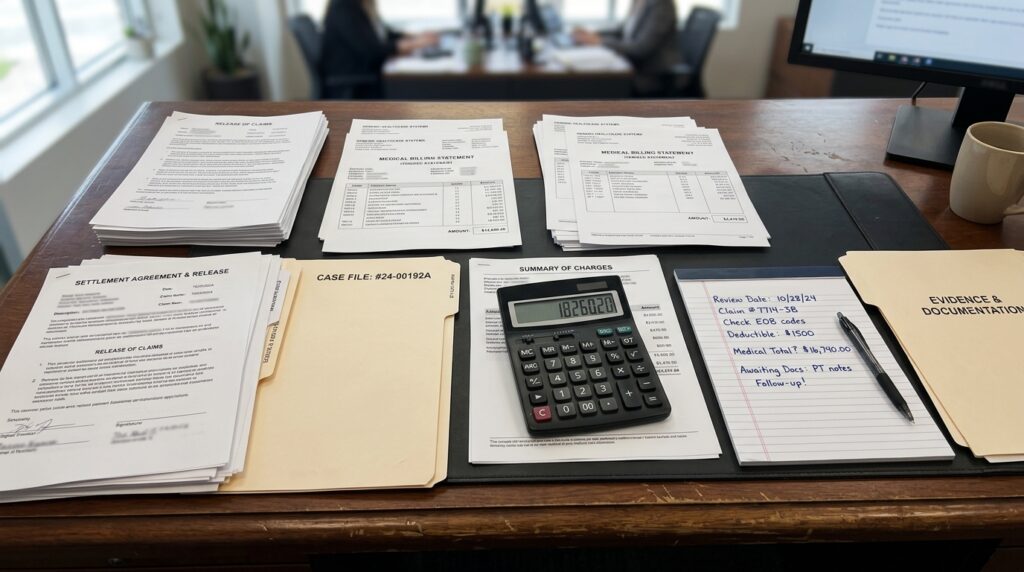
Before settlement, the injured person should understand:
- Diagnosis
- Treatment plan
- Medical bills
- Future care needs
- Lost wages
- Work restrictions
- Permanent limitations
- Pain and suffering
- Insurance coverage
- Liability evidence
- Deadline risks
For settlement-specific context, readers may review how personal injury settlements can vary by injury severity, evidence, liability, and available coverage.
Mistake 14: Ignoring Comparative Fault Arguments
The other side may argue that the injured person was partly responsible. This can happen in car crashes, falls, bicycle accidents, pedestrian accidents, workplace incidents, dog bites, and construction injury claims.
New York Civil Practice Law & Rules § 1411 addresses comparative negligence. In general, a claimant’s own fault does not automatically bar recovery, but damages may be reduced based on the share of responsibility assigned to the claimant. (NYSenate.gov)
Comparative fault arguments may include claims that the injured person was distracted, speeding, wearing unsafe footwear, ignoring warning signs, crossing outside a crosswalk, failing to see an obvious condition, or not using available safety equipment.
Evidence matters because it can reduce unfair blame.
Mistake 15: Not Identifying All Responsible Parties
Some claims involve more than one responsible party. Identifying only the most obvious person can leave important insurance coverage or liability evidence unexplored.
Examples include:
- A truck crash involving a driver, trucking company, cargo loader, and maintenance provider
- A construction accident involving a general contractor, subcontractor, property owner, and equipment company
- A fall involving a property owner, tenant, maintenance contractor, and snow removal company
- A workplace accident involving workers’ compensation and a third-party claim
- A rideshare crash involving app status, another driver, and multiple insurers
Identifying all responsible parties helps protect the claim and may affect available recovery.
Mistake 16: Waiting Too Long to Preserve Video Footage
Video footage can be powerful evidence, but it may disappear quickly. Businesses, apartment buildings, traffic cameras, dashcams, buses, trucks, rideshare vehicles, and neighboring properties may overwrite footage within days or weeks.
Potential video sources may include:
- Store cameras
- Parking lot cameras
- Doorbell cameras
- Dashcams
- Traffic cameras
- Truck cameras
- Rideshare vehicle cameras
- Apartment building cameras
- Nursing home hallway cameras
- Construction site cameras
The longer a person waits, the harder it may be to locate and preserve footage.
Mistake 17: Not Keeping an Organized Claim File
A personal injury claim can involve many documents. Without organization, important records can be lost.
A basic claim file may include:
- Accident reports
- Medical records
- Medical bills
- Photos and videos
- Witness information
- Insurance letters
- Claim numbers
- Prescription receipts
- Travel expenses
- Lost wage records
- Work restriction notes
- Repair estimates
- Personal notes about symptoms
- Calendar of appointments
- Copies of emails and text messages
Organized records help tell the story clearly. They also make it easier to evaluate damages, treatment history, and insurance issues.
When Legal Guidance May Be Useful
Legal guidance may be useful when injuries are serious, fault is disputed, insurance companies ask for recorded statements, a public entity may be involved, deadlines are unclear, or settlement offers arrive before treatment is complete.
A claim review may require medical records, insurance documents, evidence preservation, liability analysis, deadline tracking, and identification of all responsible parties. People researching local resources may review a Farmingdale legal office location when looking for Long Island personal injury claim information.
FAQs About Personal Injury Claim Mistakes
What is the biggest mistake after a personal injury accident?
One of the biggest mistakes is waiting too long to get medical care. Delayed treatment can harm health and make it harder to prove that the accident caused the injury. Prompt medical records help document symptoms, diagnosis, treatment, and injury timing.
Can social media hurt a personal injury claim?
Yes. Social media posts, photos, comments, check-ins, and videos may be used to question injury severity, activity level, fault, or credibility. It is safer to avoid posting about the accident, injuries, treatment, insurance, or settlement discussions.
Should someone accept the first settlement offer?
The first settlement offer should be reviewed carefully. Early offers may not include future medical care, lost income, permanent limitations, or long-term pain. Once a settlement release is signed, the claim is usually closed.
What evidence should be saved after an accident?
Important evidence may include photos, videos, accident reports, witness details, medical records, insurance letters, damaged items, repair estimates, lost wage records, receipts, and notes about symptoms or daily limitations.
Can a claim still exist if the injured person was partly at fault?
Yes. New York comparative negligence rules generally allow a claim even when the injured person shares some responsibility. However, damages may be reduced based on the percentage of fault assigned to that person.
Final Thoughts
Personal injury claims in New York are often won or weakened through documentation. Medical care, accident reports, photos, witness information, insurance deadlines, preserved evidence, and careful communication all matter. The safest approach after an accident is to treat injuries seriously, keep records, avoid speculation, protect deadlines, and wait until the full medical and financial impact is clearer before making settlement decisions.
