
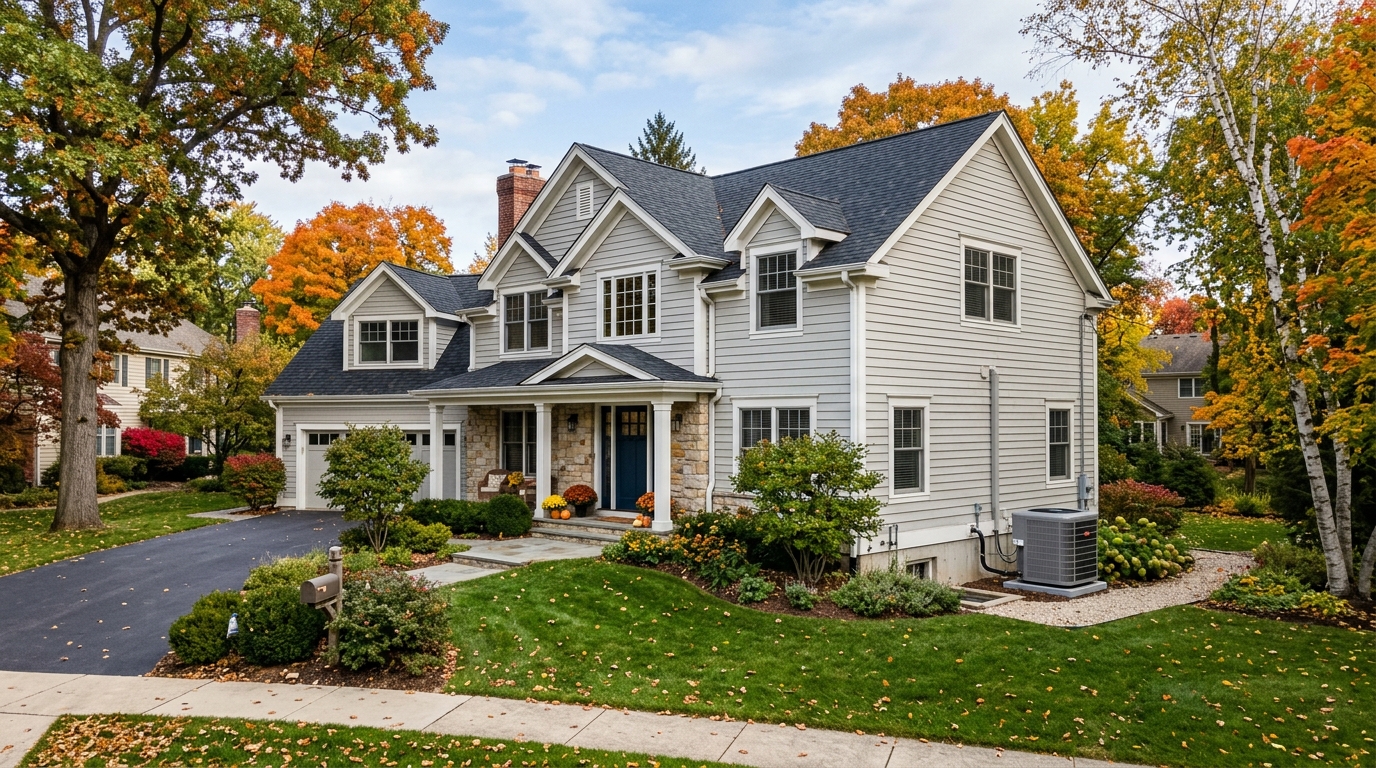
Living comfortably in Ann Arbor means asking a home’s heating and cooling systems to handle dramatically different conditions throughout the year.
Winter can bring extended periods of freezing temperatures, while summer introduces heat and humidity. Spring and fall add another challenge: rapidly changing weather that can shift a home from heating to cooling—and sometimes back again—within a relatively short period.
For homeowners, maintaining comfort therefore involves much more than owning a furnace and an air conditioner.
HVAC equipment, insulation, airflow, humidity, filtration, thermostats, ductwork, ventilation, and routine maintenance all influence how comfortable and efficient a home feels.
When something stops working correctly, professional HVAC repair Ann Arbor MI services can help determine whether the problem comes from the equipment itself or from another part of the home’s comfort system.
This guide explains the major factors Ann Arbor homeowners should understand when maintaining year-round indoor comfort.
Quick Answer
Ann Arbor homeowners can improve year-round comfort by maintaining heating and cooling equipment, correcting airflow problems, controlling indoor humidity, using appropriate filtration, improving the building envelope, and addressing HVAC problems before they become major failures.
Because Michigan experiences substantial seasonal temperature changes, homeowners should think about comfort as a whole-home system rather than focusing only on the furnace or air conditioner.
Key Takeaways
- Ann Arbor homes need dependable heating and cooling because of Michigan’s seasonal climate.
- HVAC maintenance can help identify developing problems before peak heating or cooling demand.
- Uneven temperatures may result from equipment, ductwork, insulation, or airflow problems.
- Humidity affects both winter and summer comfort.
- Heat pumps can provide heating and cooling from a single system.
- Filtration and ventilation contribute to indoor air quality.
- Thermostat settings influence comfort and HVAC runtime.
- Replacement decisions should consider equipment condition, reliability, efficiency, and overall home needs.
Understanding Ann Arbor’s Heating and Cooling Needs
Ann Arbor experiences four distinct seasons.
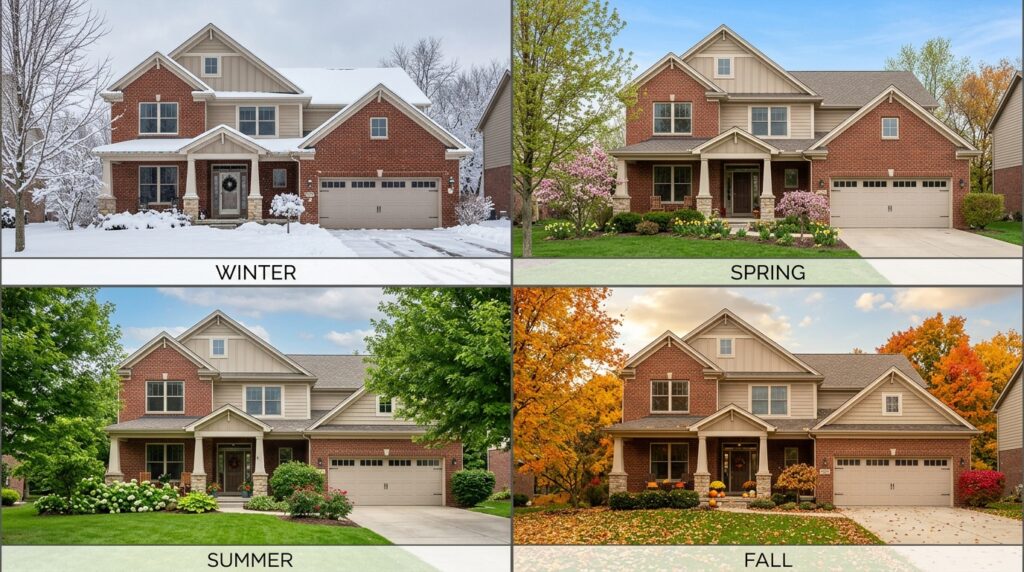
That means residential HVAC systems may need to provide:
- Significant winter heating
- Summer cooling
- Humidity management
- Air circulation
- Transitional-season comfort
The demands placed on HVAC equipment can change substantially throughout the year.
A system that performs well during mild spring weather may reveal problems during the first major summer heat wave.
Likewise, a furnace that appears functional during fall may struggle once winter temperatures remain below freezing for extended periods.
This is why seasonal preparation is important.
Winter Comfort Starts With Reliable Heating
Heating is one of the most important home-comfort priorities in southeast Michigan.
Depending on the property, Ann Arbor homes may use:
- Natural-gas furnaces
- Heat pumps
- Dual-fuel systems
- Boilers
- Ductless mini-splits
- Electric heating
Regardless of equipment type, the heating system should be capable of maintaining comfortable indoor conditions without abnormal operation.
Warning signs of a heating problem can include:
- Rooms that remain cold
- Unusually long heating cycles
- Frequent cycling
- New equipment noises
- Weak airflow
- Unexpectedly high energy consumption
- Difficulty maintaining thermostat settings
These symptoms deserve investigation rather than automatically being attributed to cold Michigan weather.
Furnace Performance Depends on More Than the Furnace
A furnace produces heat, but several other systems determine whether that heat reaches occupied rooms effectively.
These include:
- Blower performance
- Supply ductwork
- Return ductwork
- Air filters
- Registers
- Insulation
- Air sealing
- Thermostat operation
For example, a furnace may be functioning correctly while inadequate return airflow limits overall system performance.
Similarly, significant air leakage or poor insulation can make rooms uncomfortable even when the heating equipment itself is operating normally.
Professional heating and cooling Ann Arbor MI evaluation can help distinguish an equipment problem from a broader airflow or building-performance issue.
Summer Comfort Requires Cooling and Humidity Control
Air conditioning performs two important functions during humid Michigan summers:
Cooling the air and removing moisture from it.
A home can therefore feel uncomfortable even when the thermostat indicates a reasonable temperature if indoor humidity remains high.
Possible signs of cooling problems include:
- Long operating cycles
- Uneven temperatures
- Weak airflow
- Warm supply air
- Excess indoor humidity
- Water around equipment
- Unusual noises
- Frequent cycling
Some problems are relatively minor.
Others may indicate refrigerant, electrical, airflow, drainage, or major component issues.
The important point is to diagnose the cause rather than assuming every comfort problem requires equipment replacement.
Why HVAC Sizing Matter
Bigger HVAC equipment is not automatically better.
Heating and cooling equipment should be sized according to the home’s actual load.
Relevant factors include:
- Square footage
- Insulation
- Air leakage
- Window characteristics
- Orientation
- Occupancy
- Ductwork
- Local climate
Oversized cooling equipment may satisfy the thermostat quickly but operate in shorter cycles, which can affect humidity removal and comfort.
Undersized equipment may struggle during demanding weather.
Professional system design should therefore use appropriate load calculations rather than relying only on the capacity of the equipment being replaced.
Uneven Temperatures Are a Whole-Home Problem
One of the most common comfort complaints is that certain rooms are consistently hotter or colder than others.
Possible causes include:
- Duct leakage
- Restricted airflow
- Poor return-air design
- Closed or obstructed registers
- Insulation differences
- Window exposure
- Air leakage
- Equipment problems
- Building layout
Second floors, additions, rooms over garages, and spaces with significant exterior exposure can present particular comfort challenges.
Closing random supply registers is not always an effective solution and may alter system airflow.
The underlying cause should be identified first.
Airflow Is Essential to HVAC Performance
Heating and cooling equipment depends on moving appropriate amounts of air.
Potential airflow restrictions include:
- Dirty filters
- Blocked return grilles
- Closed registers
- Duct restrictions
- Dirty coils
- Blower problems
- Improper duct sizing
Poor airflow can affect:
- Comfort
- Equipment performance
- Heating and cooling capacity
- System runtime
Homeowners should keep supply and return openings unobstructed and use filters appropriate for their HVAC equipment.
Persistent airflow problems deserve professional evaluation.
HVAC Filters Need the Right Balance
Filters help protect HVAC equipment and can capture airborne particles.
However, the most restrictive filter available is not automatically the correct filter for every system.
Filter selection should consider:
- Filtration efficiency
- Filter dimensions
- Surface area
- Blower capability
- Pressure drop
- HVAC manufacturer requirements
An overly restrictive filter can contribute to airflow problems if the HVAC system is not designed to accommodate it.
Homeowners interested in higher-performance filtration should therefore evaluate filtration and airflow together.
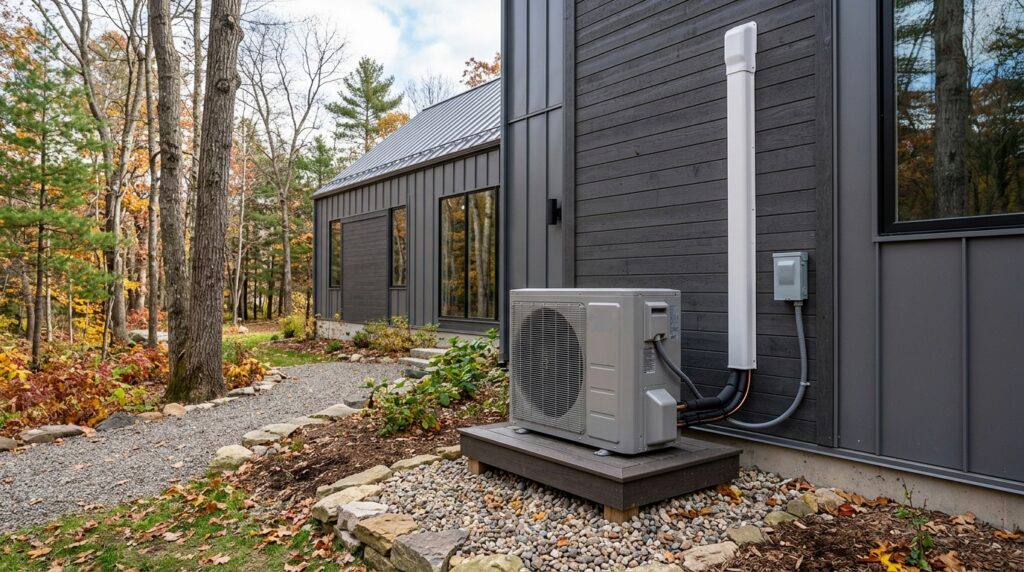
Heat Pumps Are Becoming an Important Ann Arbor Option
Heat pumps can provide both heating and cooling by transferring heat rather than relying exclusively on combustion-based heating.
Modern cold-climate equipment has expanded the range of conditions in which heat pumps can operate effectively.
For Ann Arbor homeowners considering a heat pump Ann Arbor system, important considerations include:
- Home heating load
- Equipment capacity
- Cold-weather performance
- Electrical requirements
- Ductwork
- Existing heating equipment
- Backup-heating strategy
- Installation quality
Heat pumps should be selected based on the home’s actual requirements rather than simply choosing equipment based on nominal size.
What Happens to Heat Pump Efficiency in Cold Weather?
Heat pumps move heat from outdoor air into the home during heating operation.
As outdoor temperatures fall, heating demand rises while equipment performance characteristics change.
Modern cold-climate heat pumps are designed specifically to maintain useful heating capacity at lower outdoor temperatures, but performance varies by model.
That is why homeowners should compare manufacturer performance data at cold-weather design conditions rather than evaluating equipment only by its general efficiency rating.
System design is particularly important in Michigan because heating performance matters most when outdoor temperatures are at their lowest.
Dual-Fuel Systems Offer Another Heating Strategy
Some Ann Arbor homes may use a heat pump together with a gas furnace.
This configuration is often called:
- Dual fuel
- Hybrid heating
- Crossover heating
The heat pump can provide heating under appropriate conditions, while the furnace provides another heating source when system controls determine it is appropriate.
The ideal changeover strategy depends on factors such as:
- Equipment performance
- Outdoor temperature
- Utility rates
- System design
- Home heating load
Dual-fuel systems can provide homeowners with another way to combine heat-pump technology with conventional furnace heating.
Ductless Mini-Splits Can Solve Specific Comfort Problems
Not every Ann Arbor home is ideally suited to a conventional central duct system.
Ductless mini-split heat pumps can be useful for:
- Home additions
- Finished attics
- Rooms with persistent comfort problems
- Homes without conventional ductwork
- Garages converted to living space
- Targeted heating and cooling zones
A ductless system includes one or more indoor units connected to an outdoor heat-pump unit.
Because conditioned air is delivered directly to the occupied zone, extensive ductwork may not be necessary.
Proper sizing and placement remain important for comfort and performance.
Thermostat Strategy Affects Comfort
The thermostat acts as the control point for the HVAC system.
Homeowners should consider:
- Appropriate temperature settings
- Occupancy schedules
- Equipment type
- Recovery behavior
- Household routines
Programmable and smart thermostats can help align heating and cooling schedules with occupancy.
However, aggressive temperature setbacks are not always ideal for every HVAC configuration.
Heat pumps, for example, may use auxiliary heating differently depending on thermostat strategy and system design.
Thermostat programming should therefore match the installed equipment.
Indoor Humidity Changes With the Seasons
Ann Arbor homeowners may encounter opposite humidity problems at different times of year.
During winter
Heated indoor air can become very dry, potentially contributing to:
- Dry-air discomfort
- Static electricity
- Dry-feeling skin
- Shrinkage of some wood materials
During summer
High indoor humidity can make the home feel warmer and less comfortable.
Potential signs include:
- Clammy indoor conditions
- Condensation
- Musty odors
- Difficulty feeling comfortable at normal thermostat settings
Humidity should be managed carefully.
Too much winter humidification can contribute to condensation on cold surfaces, while excessive summer humidity may indicate cooling, ventilation, moisture, or building-envelope problems.
Ventilation Is Part of Home Comfort
Comfort is not only about temperature.
Homes also need appropriate ventilation to help manage indoor pollutants and moisture.
Ventilation may come from:
- Kitchen exhaust
- Bathroom exhaust
- Mechanical ventilation
- Heat recovery ventilators
- Energy recovery ventilators
The appropriate strategy depends on the home’s construction and airtightness.
Older homes may have substantial natural air leakage, while newer or renovated homes can be much tighter and may benefit from more deliberate ventilation.
Indoor Air Quality and Comfort Are Connected
Dust, particles, odors, humidity, and ventilation can influence how a home feels even when heating and cooling equipment is maintaining the thermostat setting.
A broader indoor comfort strategy may include:
- Source control
- HVAC filtration
- Portable filtration where appropriate
- Humidity management
- Ventilation
- Routine cleaning
- HVAC maintenance
No single product solves every indoor air quality concern.
The appropriate approach depends on the pollutants or conditions actually present in the home.
Spring HVAC Preparation in Ann Arbor
Spring is a useful time to prepare cooling equipment before sustained warm weather arrives.
Homeowners can:
- Replace or inspect filters
- Clear debris around outdoor equipment
- Check thermostat operation
- Make sure supply and return vents are unobstructed
- Schedule professional cooling maintenance
- Watch for unusual startup noises
Early evaluation provides more time to address problems before cooling becomes essential.
Fall HVAC Preparation in Ann Arbor
Fall serves the same purpose for heating equipment.
Before prolonged cold weather, homeowners should consider:
- Testing heating operation
- Inspecting or replacing filters
- Checking thermostat operation
- Making sure vents are open
- Scheduling heating maintenance
- Testing safety alarms according to manufacturer instructions
Discovering a heating problem during mild fall weather is preferable to discovering it during a January cold spell.
Preventative Maintenance Supports Year-Round Reliability
HVAC maintenance cannot guarantee that equipment will never fail.
However, scheduled service creates opportunities to identify developing issues involving:
- Electrical components
- Motors
- Blowers
- Coils
- Filters
- Drainage
- Controls
- Heating components
- Refrigerant-related performance
Maintenance also provides homeowners with information about equipment condition.
That becomes increasingly valuable as systems age and repair-versus-replacement decisions become more frequent.
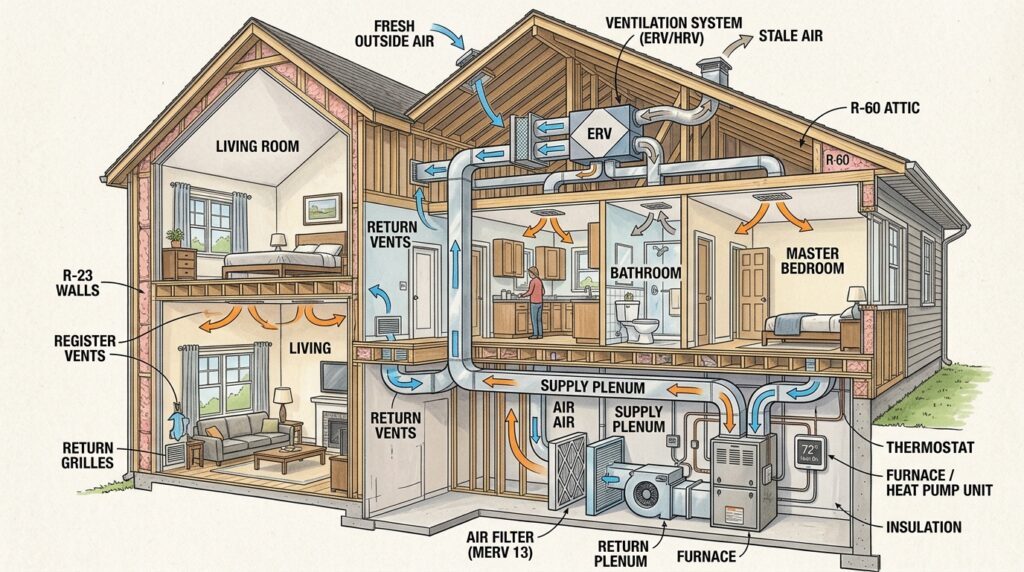
Ann Arbor Home Comfort Is a System, Not a Single Appliance
The most important principle for homeowners is that comfort comes from multiple systems working together.
A high-efficiency furnace cannot fully compensate for severe duct leakage.
A new air conditioner cannot correct every insulation problem.
A powerful filter cannot solve inadequate ventilation.
And a smart thermostat cannot correct improperly sized HVAC equipment.
The strongest home-comfort strategy considers:
Heating + cooling + airflow + humidity + filtration + ventilation + insulation + controls.
When these elements are evaluated together, homeowners can make more informed decisions about repairs, maintenance, upgrades, and replacement.
Energy Efficiency Starts With the Whole Home
An efficient furnace, air conditioner, or heat pump is important, but equipment efficiency is only one part of home energy performance.
The U.S. Department of Energy recommends looking at the home as a complete system, including the building envelope, insulation, air leakage, ductwork, HVAC equipment, and controls.
For Ann Arbor homeowners, this whole-home approach can be especially valuable because heating represents a significant comfort requirement during Michigan winters.
Potential energy improvements may involve:
- Air sealing
- Attic insulation
- Wall or rim-joist insulation
- Duct sealing
- HVAC maintenance
- Thermostat optimization
- Equipment upgrades
- Window or door improvements
Before assuming that an aging HVAC system is responsible for every high utility bill, homeowners should consider where the home may actually be losing energy.
Insulation Has a Direct Effect on Comfort
Insulation slows heat transfer through the building envelope.
During winter, it helps reduce heat loss from conditioned indoor spaces.
During summer, it helps reduce unwanted heat gain.
Insulation deficiencies can contribute to:
- Cold rooms
- Hot upper floors
- Temperature differences between rooms
- Longer HVAC cycles
- Higher energy consumption
- Difficulty maintaining thermostat settings
Common areas that may deserve attention include:
- Attics
- Exterior walls
- Rim joists
- Floors above unconditioned spaces
- Basement or crawl-space boundaries
DOE guidance identifies insulation and air sealing as important measures for improving both energy performance and indoor comfort.
Air Sealing and Insulation Are Different
Insulation and air sealing work together, but they perform different functions.
Insulation slows heat transfer through building materials.
Air sealing reduces uncontrolled movement of air through cracks and openings.
A home can therefore contain substantial insulation and still feel drafty if air leaks remain around:
- Attic penetrations
- Plumbing openings
- Electrical penetrations
- Rim joists
- Doors
- Windows
- Duct penetrations
- Recessed fixtures
DOE building-science guidance notes that air sealing can improve comfort while reducing unwanted air movement through the building envelope.
For Ann Arbor homeowners experiencing persistent drafts, simply increasing thermostat temperature may treat the symptom without addressing the underlying building-envelope problem.
Consider an Energy Assessment Before Major Upgrades
When homeowners are uncertain where energy is being lost, a home energy assessment can provide useful information.
Depending on the assessment, diagnostic methods may include:
- Visual inspection
- Blower-door testing
- Infrared imaging
- Insulation evaluation
- Air-leakage assessment
The objective is to identify which improvements are most likely to address the home’s actual problems rather than guessing.
DOE recommends an energy evaluation as a useful starting point for identifying efficiency opportunities.
This can be particularly valuable before investing in major HVAC replacement or weatherization work.
Duct Leakage Can Waste Conditioned Air
In homes with central forced-air systems, ductwork is responsible for delivering heated and cooled air to occupied rooms.
Problems may include:
- Leaky duct joints
- Disconnected sections
- Poor insulation
- Restrictions
- Improper sizing
- Inadequate return-air pathways
If conditioned air escapes before reaching the room, homeowners may experience both comfort problems and unnecessary HVAC runtime.
DOE notes that duct losses can be substantial, particularly where ducts travel through unconditioned areas.
A duct evaluation may therefore be appropriate when certain rooms remain uncomfortable despite otherwise functional HVAC equipment.
When Should an HVAC System Be Repaired?
Repair can be reasonable when:
- The equipment has generally been reliable.
- The current problem is isolated.
- The repair cost is manageable.
- Major components remain in good condition.
- Energy performance remains acceptable.
- Replacement is not otherwise necessary.
Homeowners should avoid assuming that one breakdown automatically means the entire HVAC system needs replacement.
Accurate diagnosis comes first.
Professional HVAC repair Ann Arbor MI can help identify whether a comfort problem results from a failed component, airflow issue, control problem, or broader equipment deterioration.
When Should Replacement Be Considered?
Replacement deserves stronger consideration when several problems occur together.
Potential indicators include:
- Frequent breakdowns
- Increasing repair costs
- Major component failure
- Declining comfort
- Increasing energy consumption
- Difficulty obtaining replacement parts
- Equipment approaching the end of its practical service life
Replacement decisions should consider expected future ownership costs rather than equipment age alone.
A functioning older system does not necessarily need immediate replacement.
Conversely, relatively young equipment with major recurring problems may deserve closer evaluation.
Furnace Lifespan Should Be Used as a Planning Tool
Homeowners often ask for an exact furnace lifespan.
In practice, equipment life varies considerably.
Factors include:
- Installation quality
- Maintenance history
- Annual runtime
- Equipment design
- Airflow
- Operating conditions
- Component wear
Instead of treating a certain birthday as an automatic replacement deadline, homeowners should monitor the furnace’s pattern of reliability.
An older furnace that remains dependable and performs well may continue providing useful service.
An aging furnace experiencing repeated failures deserves more careful replacement planning.
Air Conditioner Age Should Be Evaluated the Same Way
Central air conditioners also age differently depending on installation, maintenance, operating hours, airflow, and environmental conditions.
As an AC system gets older, homeowners should pay closer attention to:
- Repair frequency
- Cooling capacity
- Runtime
- Humidity control
- Electricity consumption
- Refrigerant-related problems
- Major component condition
Planning before complete failure gives homeowners more time to compare equipment rather than making a rushed decision during hot weather.
Heat Pump Replacement Requires Cold-Climate Planning
A heat pump replacement decision requires consideration of both cooling and heating performance.
DOE explains that modern heat pumps can provide heating and cooling and that cold-climate models are designed specifically for lower outdoor temperatures.
For homeowners considering a heat pump Ann Arbor installation or replacement, useful questions include:
- What is the home’s heating load?
- How much capacity does the unit provide at low temperatures?
- Will supplemental heat be required?
- Is existing ductwork adequate?
- Does the electrical system need modification?
- Should weatherization occur first?
DOE also recommends considering weatherization when upgrading to heat-pump equipment because reducing the home’s heating and cooling load can influence system sizing and comfort.
Common Ann Arbor Home Comfort Problem: Cold Upstairs or Downstairs Rooms
Temperature differences between floors can result from several causes.
Potential contributors include:
- Building layout
- Stack effect
- Duct design
- Insulation differences
- Air leakage
- Return-air limitations
- Window exposure
A thermostat located on one floor only measures conditions near that thermostat.
That means the HVAC system may satisfy the thermostat while another floor remains uncomfortable.
Solutions should address the underlying cause rather than simply changing thermostat settings repeatedly.
Common Comfort Problem: One Room Is Always Cold
When one room remains colder than the rest of the house, homeowners should investigate:
- Supply airflow
- Return airflow
- Duct condition
- Exterior-wall exposure
- Window condition
- Insulation
- Air leakage
If the rest of the home is comfortable, replacing the entire furnace may not address the problem.
A room-specific comfort issue often deserves room-specific diagnosis first.
Common Comfort Problem: HVAC Runs Constantly
Long HVAC cycles can occur during severe weather, particularly when equipment is operating near design conditions.
However, a noticeable change in runtime may indicate:
- Dirty filters
- Airflow restrictions
- Equipment problems
- Thermostat issues
- Duct leakage
- Insulation deficiencies
- Air leakage
- Incorrect equipment sizing
Homeowners should compare current behavior with the system’s normal operating pattern.
A major change deserves investigation.
Common Comfort Problem: Utility Bills Suddenly Increase
A high bill does not automatically prove that HVAC equipment is failing.
Energy consumption can change because of:
- Colder or hotter weather
- Utility-rate changes
- Longer HVAC runtime
- Thermostat changes
- Household occupancy
- Equipment problems
- Air leakage
- Duct problems
Reviewing several months or years of comparable utility data can help identify whether the change represents a persistent trend.
Homeowners can also consider a professional energy assessment when the cause remains unclear.
Common Comfort Problem: Furnace Turns On and Off Frequently
Frequent short cycles may result from several conditions.
Possible causes include:
- Thermostat problems
- Airflow restrictions
- Equipment sizing
- Control problems
- Heating-system faults
Because short cycling can have multiple causes, diagnosis is preferable to guessing.
Repeated abnormal cycling should not be ignored simply because the home still feels warm.
Common Comfort Problem: AC Runs but the House Feels Humid
An air conditioner can cool the home while still providing unsatisfactory humidity control.
Possible contributors include:
- Equipment sizing
- Short operating cycles
- Airflow issues
- Cooling-system problems
- Moisture entering the building
- Ventilation conditions
The correct solution depends on the cause.
Installing additional dehumidification equipment without first evaluating the cooling system and building conditions may not address the underlying problem.
Warning Signs That Need Prompt HVAC Attention
Some HVAC symptoms deserve faster professional attention than ordinary comfort complaints.
Examples include:
- Burning or unusual electrical odors
- Repeated breaker trips
- Significant water leakage
- Equipment that will not operate during severe weather
- Loud new mechanical noises
- Visible equipment damage
Fuel-burning equipment also requires special attention to safe combustion and venting.
Homeowners should maintain appropriate safety alarms and follow manufacturer and local safety guidance.
What Ann Arbor Homeowners Can Maintain Themselves
Homeowners can perform several useful HVAC-related tasks without attempting technical repairs.
These may include:
- Inspecting filters
- Replacing filters when required
- Keeping registers unobstructed
- Keeping return grilles clear
- Removing debris around outdoor equipment
- Monitoring thermostat operation
- Watching for unusual noises
- Looking for water where it should not be
ENERGY STAR recommends regular filter attention and professional pre-season HVAC checkups, with cooling service before summer and heating service before winter.
Homeowners should leave refrigerant, electrical, combustion, and internal mechanical diagnosis to qualified professionals.
Seasonal Professional Maintenance Has Practical Advantages
Scheduling HVAC maintenance before peak season can help identify problems before equipment is needed most.
For Ann Arbor homeowners, a practical pattern is:
Spring: cooling-system preparation.
Fall: heating-system preparation.
ENERGY STAR’s maintenance guidance specifically recommends annual pre-season checkups and notes that contractors become busier once peak summer and winter demand arrives.
A professional maintenance visit may evaluate items such as:
- Thermostat operation
- Electrical connections
- Controls
- Condensate drainage
- Coils
- Blower operation
- Heating-system components
The exact checklist should reflect the equipment installed.
Don’t Ignore the Building Envelope When Replacing HVAC Equipment
Replacing HVAC equipment without considering insulation and air leakage can miss an important opportunity.
If substantial weatherization work is planned, the home’s heating and cooling loads may change.
DOE guidance specifically supports an envelope-first approach in situations where weatherization needs are identified because air sealing and insulation can reduce loads and improve comfort.
That matters because HVAC equipment should be sized for the home’s actual load.
A homeowner planning both weatherization and HVAC replacement should coordinate the projects rather than treating them as completely unrelated upgrades.
Choosing an HVAC Contractor in Ann Arbor
A home-comfort contractor should be able to look beyond the immediate symptom.
When evaluating providers for heating and cooling Ann Arbor MI, homeowners may want to consider:
- Licensing and insurance
- Local residential HVAC experience
- Diagnostic capabilities
- Heating and cooling expertise
- Heat-pump knowledge
- Airflow and ductwork experience
- Maintenance programs
- Written repair and replacement proposals
- Warranty support
For major replacement projects, homeowners may also want to ask how equipment sizing was determined.
A replacement proposal based solely on the capacity of the old equipment may overlook changes made to the home or problems with the original installation.
Ask Better Questions Before Approving HVAC Work
Useful questions include:
- What caused the problem?
- Is the issue isolated or recurring?
- What measurements support the diagnosis?
- What happens if the repair is postponed?
- Are there airflow or ductwork concerns?
- Is the equipment correctly sized?
- What warranty applies?
- What maintenance will the system require?
These questions help homeowners compare recommendations based on technical reasoning rather than price alone.
Build a Long-Term Home Comfort Plan
Home comfort decisions are easier when homeowners do not wait for an emergency.
A long-term plan can include:
- Annual HVAC maintenance
- Filter management
- Utility-bill monitoring
- Equipment-age tracking
- Air sealing
- Insulation improvements
- Duct evaluation
- Indoor air quality improvements
- Replacement budgeting
The plan does not need to involve completing every improvement immediately.
Instead, it helps homeowners prioritize projects according to comfort, reliability, energy performance, and available budget.
Conclusion
Comfort in an Ann Arbor home depends on more than maintaining a thermostat setting.
Michigan’s seasonal climate requires homes to manage winter heating, summer cooling, humidity, airflow, ventilation, and rapidly changing shoulder-season conditions.
A strong home-comfort strategy considers:
- Heating and cooling equipment
- HVAC maintenance
- Ductwork
- Airflow
- Insulation
- Air sealing
- Humidity
- Filtration
- Ventilation
- Controls
Homeowners should also avoid assuming that every comfort problem requires replacing HVAC equipment.
A cold room may involve ductwork or insulation.
High utility bills may involve air leakage.
Summer humidity may involve equipment sizing, airflow, or moisture entering the home.
And an older furnace or air conditioner may remain serviceable if it continues operating reliably.
The goal is to diagnose the home as a system.
By combining appropriate maintenance, timely repairs, building-envelope improvements, and thoughtful equipment planning, Ann Arbor homeowners can make better decisions about year-round comfort while reducing unnecessary energy waste and avoiding rushed HVAC replacements.
Frequently Asked Questions
What is the best way to improve home comfort in Ann Arbor?
The best approach is to evaluate the home as a complete system. Heating and cooling equipment, ductwork, insulation, airflow, humidity, filtration, ventilation, and thermostat controls all affect comfort. If problems persist, professional heating and cooling Ann Arbor MI evaluation can help identify the underlying cause.
Why are some rooms in my Ann Arbor home hotter or colder than others?
Uneven temperatures can result from duct leakage, restricted airflow, poor return-air design, insulation differences, window exposure, building layout, or HVAC equipment problems. The correct solution depends on the actual cause.
How often should HVAC systems be maintained in Ann Arbor?
Most residential HVAC systems benefit from professional service at least once a year. Systems used for both heating and cooling, such as heat pumps, may benefit from seasonal inspections before both summer and winter.
When should I call for HVAC repair?
Homeowners should consider professional HVAC repair Ann Arbor MI when the system develops persistent problems such as weak airflow, unusual noises, frequent cycling, difficulty maintaining temperature, water leakage, or repeated breakdowns.
Are heat pumps a good option for Ann Arbor homes?
For many homes, yes. Modern cold-climate heat pumps can provide both heating and cooling. A professional heat pump Ann Arbor assessment should consider home heating load, low-temperature performance, ductwork, electrical requirements, and backup-heating strategy.
Can better insulation reduce HVAC costs?
Yes. Improved insulation and air sealing can reduce unwanted heat loss in winter and heat gain in summer, which can lower HVAC runtime and improve comfort.
Why does my HVAC system run constantly?
Long runtime may result from extreme weather, equipment problems, airflow restrictions, duct leakage, poor insulation, thermostat issues, or incorrect equipment sizing. A major change in operating behavior deserves investigation.
Does a smart thermostat improve home comfort?
It can. Smart thermostats can help manage schedules, setbacks, and occupancy patterns, but they work best when programmed appropriately for the installed HVAC equipment.
How important is indoor humidity?
Very important. Low winter humidity can feel uncomfortable, while excessive summer humidity can make the home feel warmer and contribute to moisture concerns. Humidity should be managed based on the home’s actual conditions.
Can ductwork problems make HVAC equipment seem faulty?
Yes. Leaky, restricted, undersized, or poorly balanced ductwork can create uneven temperatures, weak airflow, and long operating cycles even when the heating or cooling equipment itself is functioning.
Should I replace older HVAC equipment before it completely fails?
Not necessarily. Replacement should be based on equipment condition, repair frequency, efficiency, comfort, safety, parts availability, and expected remaining life rather than age alone.
How do I choose a reliable local HVAC contractor?
Look for licensing, insurance, local experience, diagnostic capability, heating and cooling expertise, proper sizing practices, written proposals, warranty support, and clear communication. Many homeowners also review public business profiles alongside professional qualifications.
