

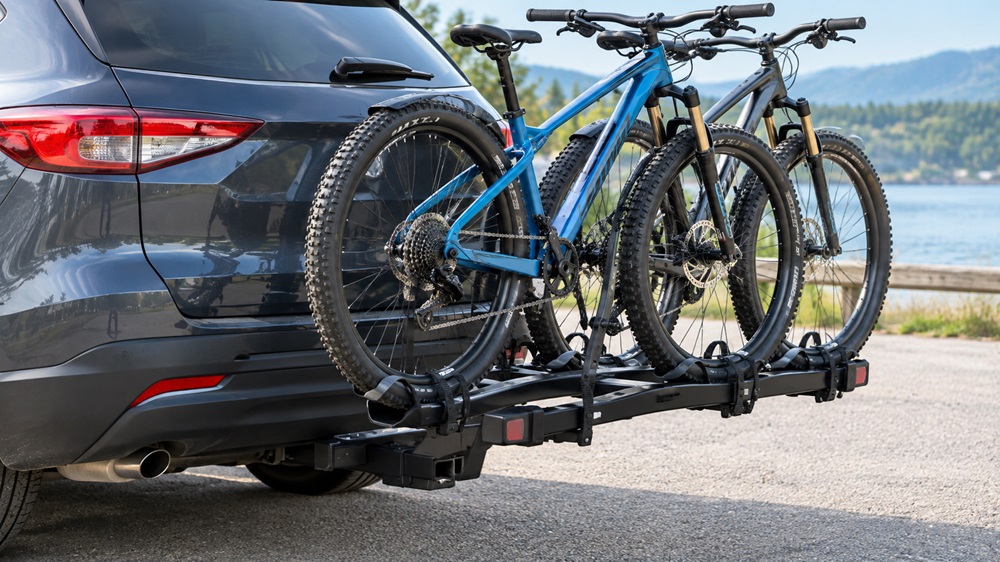
Most people never think about their bike rack until something goes wrong on the highway.
But a bike rack used even just a few seasons ago could already be past its safe limit.
UV exposure, road salt, and constant vibration all break down materials faster than you’d expect – and a rack failure at 65 mph is not something you want to find out the hard way.
How Long Does a Bike Rack Actually Last?
Most bike racks have a functional lifespan of 5 to 10 years, but that range depends heavily on materials, climate, and how often you use it.
Steel racks exposed to road salt and moisture can start showing structural corrosion within 3 to 4 years. Aluminum holds up better against rust but is more vulnerable to stress fractures under repeated load cycling.
Plastic components – straps, cradles, mounting clips – tend to degrade even faster because UV radiation breaks down polymers at a molecular level.
A study published in the journal Polymer Degradation and Stability found that UV exposure alone can reduce the tensile strength of common plastics by up to 50% within two to four years of outdoor use.
So if your rack has been sitting on your car or stored in a sunny garage for years, those plastic parts may already be significantly weaker than they look.
What Does UV Damage Actually Do to Plastic Parts?
It makes them brittle. That’s the short answer.
UV radiation breaks down the polymer chains in plastic over time. You’ll first notice it as surface discoloration – fading or chalking.
But the real problem is happening underneath. The plastic loses flexibility and becomes prone to cracking under stress, even light stress.
Cradles, straps, and mounting clips are the parts most at risk. These are exactly the parts holding your bike in place.
A strap that looks fine can snap during a sharp turn or a highway bump because the material has lost its elastic properties.
Manufacturers typically rate plastic components for 3 to 5 years of regular outdoor exposure – after that, you’re in uncertain territory.
How Does Metal Corrosion Create a Failure Point?
Corrosion doesn’t just look bad – it actively removes material from load-bearing joints and welds.
Steel racks are the most vulnerable. Salt from winter roads accelerates oxidation dramatically.
According to the American Galvanizers Association, steel exposed to deicing salts corrodes up to four times faster than steel in dry environments.
So a rack that’s been through five winters in a northern climate may have the effective structural integrity of something far older.
The most dangerous corrosion happens at welds and bolt holes – exactly where stress concentrates most. Surface rust you can wipe off is cosmetic. Rust that’s pitting into the metal at a joint is a structural problem.
Press a screwdriver firmly into any rust spots – if the metal gives or flakes inward, the rack has lost meaningful load-bearing capacity there.
Aluminum doesn’t rust the same way, but it does oxidize. More importantly, aluminum is susceptible to fatigue cracking.
Every time you hit a bump, the metal flexes slightly. Over thousands of cycles, micro-cracks form at stress points. Unlike steel, aluminum gives almost no visible warning before it fractures.
What Are the Real Signs It’s Time to Replace It?
You don’t always need a professional inspection. There are things you can check yourself in about five minutes.
Look at every weld point and joint for pitting or deep rust. Flex the plastic straps and cradles – if they feel stiff or crack slightly, they’ve degraded.
Check the mounting hardware for any play or wobble that wasn’t there before.
Any rack that shows corrosion at structural joints, brittle plastic components, or visible cracks should not go on a highway.
Also check the load rating label. If the rack is 8 or more years old and the label is unreadable, treat that as a warning in itself.
Manufacturers set weight limits based on new-condition materials. A degraded rack carrying the same load is operating outside its real safety margin.

FAQs
How do you know if a used rack is safe to buy?
Check the welds, straps, and mounting hardware in person. If there’s surface rust at joints or any cracked plastic, walk away. A rack that looks worn on the outside is usually worse on the inside.
Does storing a rack indoors make it last longer?
Yes, significantly. UV exposure and moisture are the two biggest aging factors. Indoor storage away from humidity can extend a rack’s usable life by several years.
Can you repair a corroded bike rack?
Light surface rust can be treated and sealed. But corrosion at welds or load-bearing joints isn’t safely repairable at home. At that point, replacement is the right call.
How much weight loss does corrosion cause in steel?
It depends on the severity, but structural corrosion can reduce steel’s load-bearing capacity by 20 to 40%, sometimes more in advanced cases – enough to matter on a highway.
Is a 7-year-old rack ever safe to use?
It depends on condition, not just age. A well-maintained, dry-stored aluminum rack at 7 years may still be solid. A steel rack used through several winters showing joint rust is not – regardless of how old it is. Always inspect before trusting a bike rack used for multiple seasons.

