

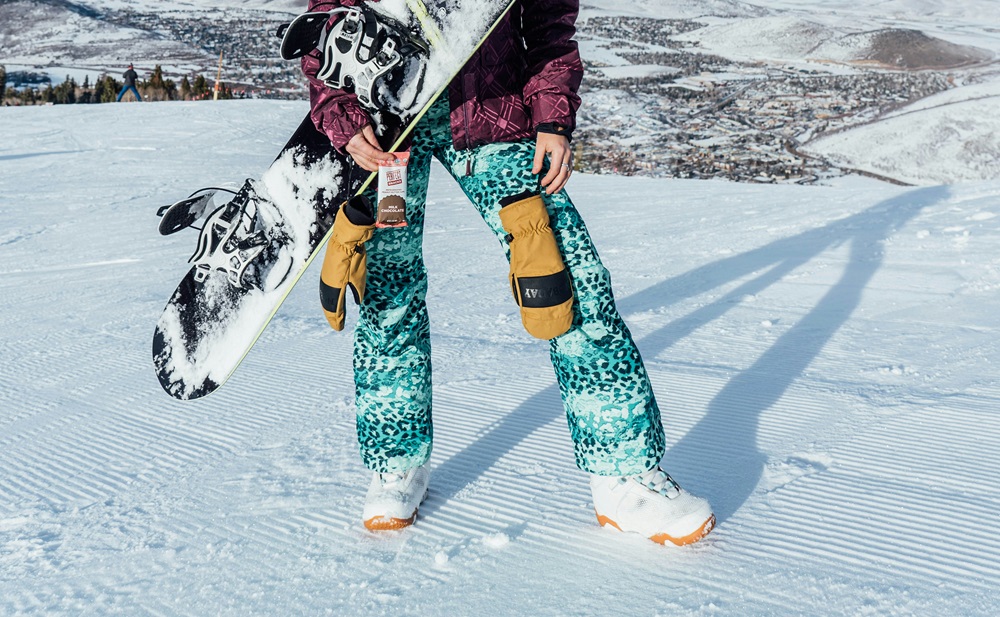
If you search for snowboarding shoes womens options, you will see a flex rating on almost every pair.
Snowboarding shoes are called snowboard boots in most shops. Flex describes how much the boot resists when you lean forward into it.
This guide is for women who want to match flex to how they ride and how long they have been riding.
What Flex Means on a Women’s Snowboard Boot
Flex is rated on a scale of 1 to 10, where 1 is the softest. Most women’s boots land on the soft to medium end.
Here is how the 3 flex groups break down:
- Soft flex (about 1 to 4): The boot bends easily, feels forgiving and takes less time to break in.
- Medium flex (about 5 to 6): The boot balances freedom of movement with support on varied terrain.
- Stiff flex (about 7 and up): The boot gives the most support for edge control at speed.
Brands rate flex on their own scales. A 5 from one maker can feel different from a 5 from another, so compare boots within a brand.
Which Flex Suits Your Riding Style
Your boot choice depends on which of these 3 styles sounds like you:
Park and Freestyle Riding
Soft flex (about 3 to 4) is the usual pick here. The boot bends easily for presses and butters. It also stays comfortable through long park laps.
Some riders move up to a medium boot once they start hitting bigger jumps, because it gives more support on landings.
All Mountain Riding
If you ride groomers, trees, bumps and the occasional park lap, a soft to medium boot (about 4 to 6) fits best.
It gives enough response to hold an edge at speed. It also stays comfortable through a full day.
Freeride and Steep Terrain
Freeriders chase speed, steeps and deep snow. A stiff boot (about 7 and up) passes your leg movement to the board faster and gives more support when you push hard.
The trade off is comfort. Stiff boots feel harsh on easy runs and need more riding to break in.
Which Flex Suits Your Ability Level
Skill level shifts the choice a little within each style. This is the usual progression:
- Beginner: Pick soft flex (about 3 to 4). Soft boots forgive mistakes and feel comfortable while you learn to link turns.
- Intermediate: Pick soft to medium flex (about 4 to 5). You start riding faster and want more response, but you still want comfort.
- Advanced: Pick medium to stiff flex (about 5 to 8) based on your terrain. Faster, more aggressive riding rewards a boot that reacts quickly.
How Your Weight and Foot Fit Change the Flex You Need
Taller and heavier riders can bend a stiff boot with ease. Lighter riders often find the same boot hard to flex.
If you weigh less, lean one step softer than the ranges above suggest.
Fit matters as much as flex. A boot that holds your heel in place lets you use the flex you paid for.
A loose heel makes even a stiff boot feel sloppy.
Quick Checks Before You Buy
These checks help you confirm a flex works for you:
- Try the boot on with your snowboard socks: Lean forward into the cuff. You should feel steady resistance while your heel stays down.
- Compare within one brand: Flex numbers shift between makers, so a brand’s own scale is easier to trust.
- Check your bindings: Make sure the boot works with your binding type before you buy.
- Look at the liner on used boots: A used boot that feels softer than its rating may have lost padding from earlier riding.

Frequently Asked Questions
These questions come up often when riders choose a boot:
Is a Stiffer Snowboard Boot Better?
A stiffer boot gives more support at speed. It only helps if you ride hard enough to use it. Most women ride well in soft to medium boots.
Can I Use the Same Boots for Park and All Mountain Riding?
Yes. A soft to medium boot (about 4 to 5) handles both well. It bends enough for park tricks and still holds up on varied terrain.
How Do I Know a Boot Is Too Stiff?
Your knees can’t move forward when you lean into the cuff. You may also feel pressure on your shins early in the day.
How Long Does It Take to Break In Snowboard Boots?
Most boots need a few days of riding. Some take up to 10 sessions. Soft boots usually break in sooner.
Do Women Need Women’s Specific Snowboard Boots?
Women’s boots usually have a narrower heel and a shorter cuff. That shape fits many women better than a men’s boot. Try both if you can, because fit is personal.
Final Thoughts
Flex depends on how you ride, how long you have been riding and how much you weigh. Soft boots suit beginners and park riders.
Medium boots cover most all mountain riding. Stiff boots reward fast, aggressive riders.
Try boots on, lean into the cuff and pick the pair that supports you without fighting you. That match makes every day on the hill easier.

